



Amid aviation’s evolving landscape, shaped by current disruptions in the Middle East, for African airports at least, there is an opportunity to capture shifting passenger flows.
Geopolitical disruption in the Middle East, driven by the Iran-US conflict, has punched a significant hole in one of the world’s busiest aviation corridors. Hubs in destinations such as Dubai, Abu Dhabi, Riyadh, and Doha have long benefitted from their geographic sweet spots. They are ideally positioned around seven to eight hours away from most global regions, serving as a natural gateway for passengers travelling between Africa, Europe and Asia.
A 2025 report by aviation analyst OAG shows just how dominant these hubs have become. It found that, over the 12 months to 2025, major hubs in the Middle East and Turkiye accounted for 43% of traffic flows between Asia-Pacific and Europe.
A strategic opening for African hub airports
While many carriers serving Africa or originating there have relied on Gulf hubs as transit hubs, the current disruption has created a strategic opening. Several African airports sit along corridors that allow aircraft to bypass restricted zones while maintaining efficient operations.
The crisis has accelerated a repositioning that was already quietly underway. Africa’s expanding hubs, with new facilities coming online in Addis Ababa, Nairobi, Kigali and Johannesburg, are increasingly seen as alternatives linking Asia, Europe and even the Americas, as airlines reassess the resilience of route networks.
Africa’s infrastructure expansion
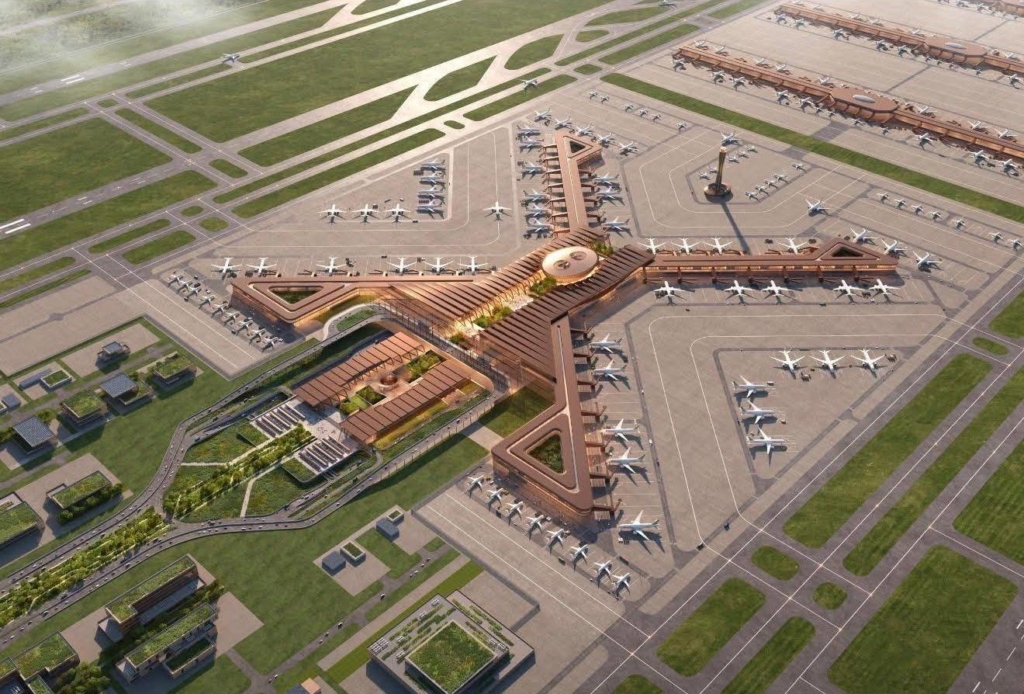
Nowhere is that ambition more visible than in Ethiopia. The country’s US$12.5 billion mega-hub Bishoftu International Airport, currently under construction, is expected to accommodate up to 60 million passengers annually when phase one is complete in 2030 and ultimately up to 110 million passengers.
Ethiopian Airlines Group CEO, Mesfin Tasew, said the airport positions Ethiopia to become the “aviation capital of Africa, serving as a major gateway connecting the continent to the world.” It will also undoubtedly serve as a gateway to rival Middle Eastern connecting airports.
Ethiopia is not alone. In South Africa, Cape Town has positioned itself as a competitor in Africa’s aviation evolution, joining the likes of Rwanda, Morocco and Kenya. At the 2026 Skytrax awards, Cape Town was one of three South African airports to secure a spot in the top 10 best airports on the continent.
Johannesburg’s OR Tambo International Airport ranked second, while Durban’s King Shaka International Airport came in fourth place.

Marrakech Menara Airport in Morocco, which remains a key player in the African aviation industry, ranked third, while Mohammed V International Airport in Casablanca ranked fifth. Cairo International Airport in Egypt, Sir Seewoosagur Ramgoolam International Airport in Mauritius, Kigali International Airport in Rwanda, Addis Ababa Bole International Airport in Ethiopia, and Ivato International Airport in Madagascar also featured in the Top 10.
African carriers are absorbing losses, not capitalising on them
However, while a broad continental push to develop the infrastructure needed to capture transit flows arising from instability in the Gulf is gaining momentum, African airlines are largely absorbing losses, rather than capitalising on the disruption.

As the continent’s largest carrier, Ethiopian Airlines has had to suspend flights to 10 Middle Eastern destinations, including Tel Aviv, Beirut, Dubai and Doha. The airline reported estimated losses of US$137 million in one week. Similarly, early March saw Kenya Airways suspend flights to Dubai and other Gulf cities, offering passengers with flights booked until 30 April the option to rebook free of charge.
Africa’s largest airline, Ethiopian Airlines, says the ongoing war involving the United States, Israel, and Iran has cost it roughly $137 million in a week.
The carrier has suspended flights to 10 Middle Eastern destinations, cancelling more than 100 flights per week.
Passenger… pic.twitter.com/wb5eSQVDgQ
— Business Insider Africa (@BusInsiderSSA) March 8, 2026
RwandAir and Uganda Airlines have also seen a drop in their services linking East Africa with destinations in the Gulf region. Although eturbo news reported that Uganda Airlines is set for a major fleet expansion with government-approved funding of US$113 million to acquire 10 new aircraft amid a push to reduce reliance on Middle East hubs.

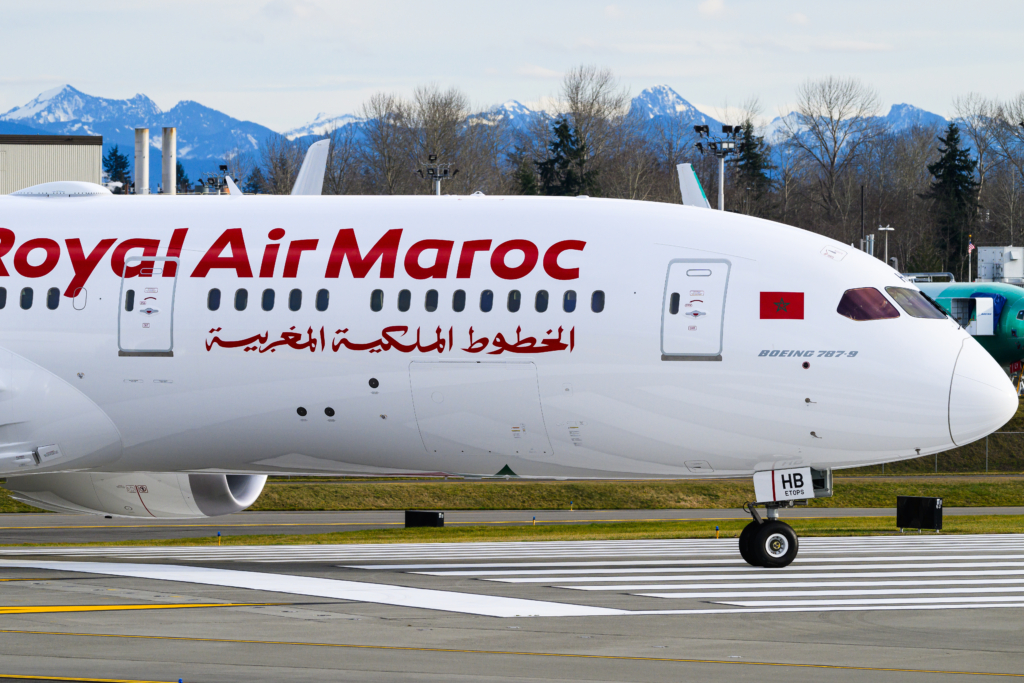
Air Tanzania has also temporarily suspended its Dubai service, while Royal Air Maroc and South African Airways (SAA) have also adjusted their operations to and from the Middle East.
Resilience and rerouting
One partial upside for Kenya Airways, however, has been the increase in demand from Europe, the Us and Asia as traffic is rerouted through Nairobi. This underpins the hub potential that African airports could claim if the disruption continues and investment follows.

Meanwhile, Ethiopian Airlines has announced it will resume direct flights from Addis to Atlanta from 21 May after a temporary interruption of the route since February 2026.
With airspace closures compounded by rising oil costs, the dominant story for most African carriers remains one of resilience rather than strategic gain. And, while the infrastructure opportunity is real, the resounding question is how well the continent’s airlines can survive the current disruption.
Featured image: Adobe stock
