
Europe accounts for more than half of all international airline capacity from Africa in August, highlighting the continent’s continued reliance on overseas markets despite strong growth in intra-African connectivity.
These numbers are revealed by OAG’s August 2026 scheduled capacity data. While airlines serving African markets have scheduled 21.5 million international seats for the month, Europe accounts for 10.8 million of those seats, or 50.35% of the total.
The figure represents an additional 664,600 seats compared with August 2025, with capacity to Europe increasing 6.6% year over year.
The Middle East is Africa’s second-largest international market, with 4.93 million scheduled seats, equivalent to 22.9% of international capacity. Together, Europe and the Middle East account for about 15.75 million seats, or more than 73% of Africa’s international scheduled capacity.
The figures underline the continuing importance of long-haul and neighboring international markets to African aviation.
Intra-African capacity is growing
International services within Africa are also expanding. Airlines have scheduled 4.53 million seats on intra-African international routes for August, up 10% from a year earlier.
However, that represents only 21.1% of Africa’s total international capacity, showing that the continent’s aviation network remains heavily oriented toward connections outside Africa.
Overall scheduled airline capacity across Africa reaches 27.3 million seats in August, an 8.4% increase from August 2025. International services represent 79% of the total, while domestic capacity stands at about 5.8 million seats.
Domestic capacity has grown even faster, rising 11% year over year.
Nigeria is among the fastest-growing major aviation markets. Scheduled capacity is up 37% to 1.22 million seats, with the country adding 330,700 seats compared with August 2025.
Nigeria’s domestic market is expanding particularly rapidly, with capacity up 42.6% to 907,600 seats.
Egypt remains Africa’s largest national aviation market, with 3.2 million scheduled seats, up 12.1%. South Africa follows with 2.34 million, while Morocco ranks third with 2.21 million.
South Africa has the continent’s largest domestic market, with 1.6 million scheduled seats.
Ethiopian leads airline capacity
Ethiopian Airlines remains Africa’s largest carrier by scheduled seat capacity. It has 2.19 million seats scheduled in August, up 10.9% year over year.
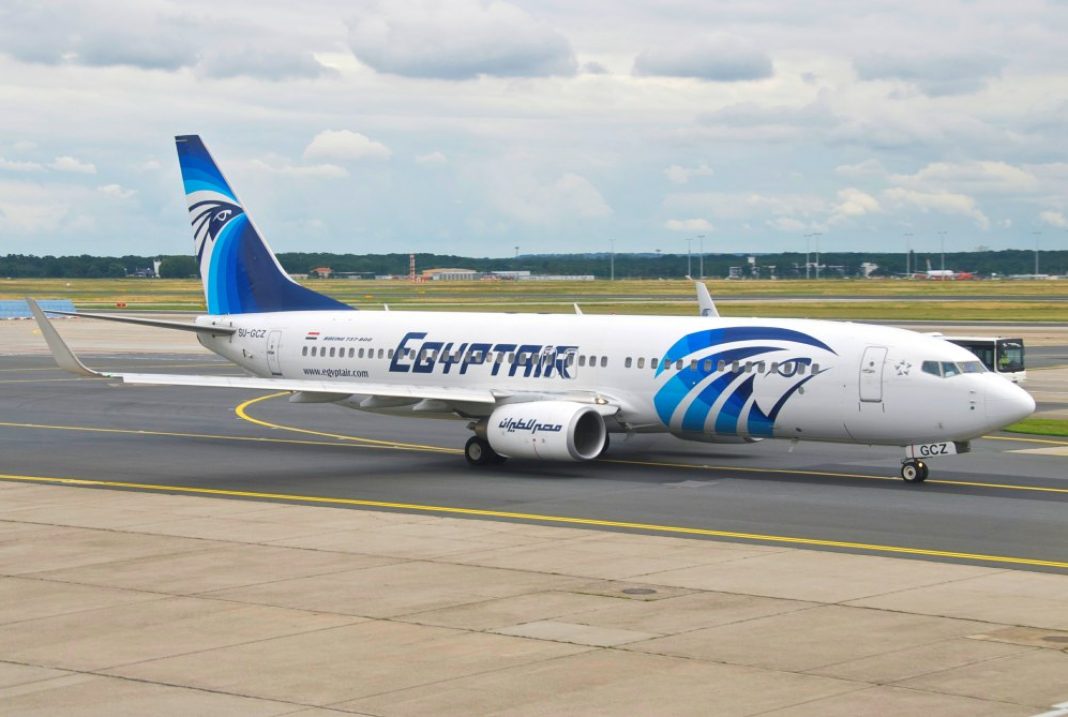
Safair ranks second with 984,700 seats, although its capacity is down 1.1%. EgyptAir is third with 922,600 seats, up 8.1%.
Royal Air Maroc ranks fourth with 868,100 seats, while Air Algérie posts the fastest growth among the leading carriers, increasing capacity 16.8%.
The remaining airlines in the top 10 include Airlink, Ryanair, Emirates, Transavia France and Kenya Airways. Kenya Airways returns to the ranking, replacing Air Peace.
At the airport level, Cairo International remains Africa’s busiest, with 1.85 million scheduled seats. Addis Ababa follows with 1.25 million, ahead of Johannesburg with 1.15 million.
Lagos’ Murtala Muhammed International Airport records the strongest growth among Africa’s 10 busiest airports, with capacity rising 25.6%. Hurghada International Airport follows with an 18.6% increase.
Outside Europe, Asia-Pacific remains a relatively small market, with 700,000 scheduled seats, or 3.3% of Africa’s international capacity. However, it recorded the fastest regional growth, at 12.9%.
The Americas account for 520,000 seats, or 2.4%, with capacity up 6.1%.
The OAG figures point to a rapidly expanding African aviation market. Yet they also show that the continent’s international connectivity remains concentrated beyond its borders, with Europe and the Middle East continuing to dominate the network.
