
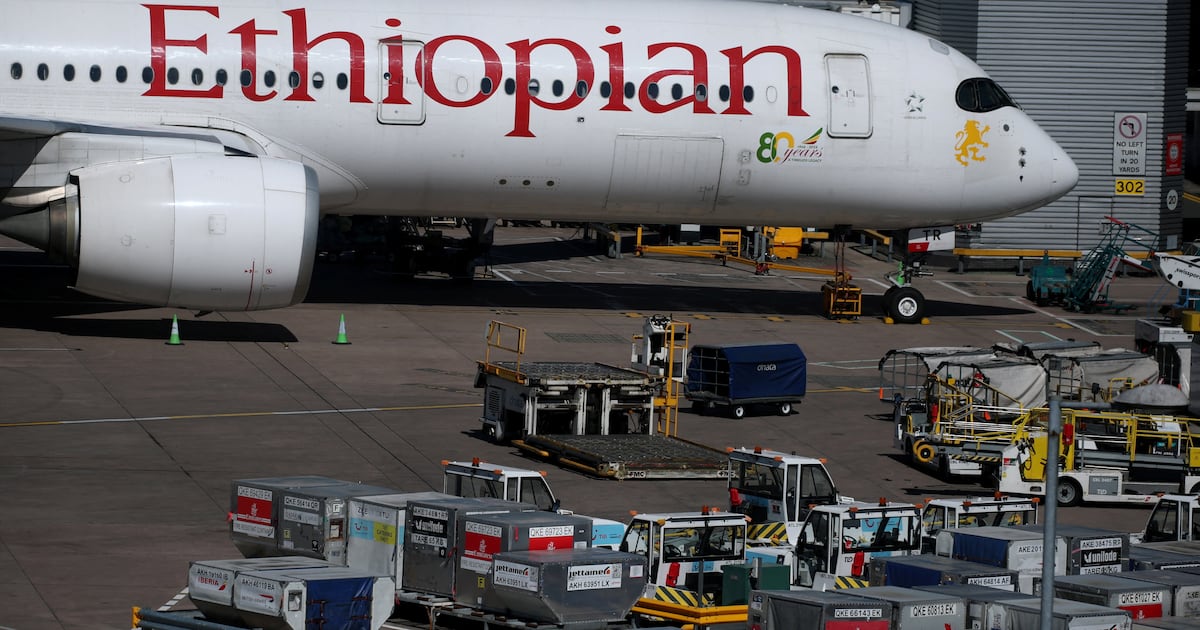
Africa still records the world’s highest aviation accident rate, while intracontinental air connectivity remains far below its potential and aviation operating costs are among the highest globally.
Taxes and charges are at least 15% above the global average and African airlines face some of the world’s highest operating costs, Kamil Alawadhi, regional vice-president for Africa and the Middle East of the International Air Transport Association (Iata), said at last week’s Aviation Africa Summit in Nairobi.
Fuel is 17% higher than the global average, accounting for 40% of operating costs in Africa, compared with 25% globally, Alawadhi said.
The event brought together airline CEOs, airport representatives, aviation lawyers, business aviation operators, manufacturers and supply chain representatives.
Alan Peaford, chair of Times Aerospace Events, called for Africa’s aviation sector to be transformed from a fragmented industry into a genuine engine of economic integration.
“Africa cannot, and will not, realise the full promise of its economic integration without a stronger aviation sector,” Peaford said.
He highlighted significant challenges ― including high fuel and operating costs, currency pressures, taxation, limited access to finance and infrastructure that has struggled to keep pace with demand. Fragmented regulation and restricted market access also continue to limit intra-African connectivity.
Yet, Africa offers substantial opportunity, including the development of globally competitive aviation hubs, growth in air cargo and logistics, expansion of sustainable aviation fuel production and the use of digital technology to improve passenger experience and operational efficiency, Peaford and Alawadhi agreed.
“Improving aviation is a choice made by governments, regulators, airports, airlines and industry partners. It is a decision to create the conditions for aviation to succeed,” said Alawadhi. “Progress comes from policy decisions, investment decisions and a commitment to work together.”
He said a turning point for aviation in Africa was Iata’s launch of Focus Africa in 2023, whose objective is to bring governments, regulators, airlines, airports and development partners together to strengthen aviation across the continent.
“We recognised that no single stakeholder could solve Africa’s aviation challenges alone. Since then, we have seen encouraging progress,” said Alawadhi, citing the improved safety performance on the continent improving and governments increasing the use of digital border management tools.
“But our work is far from finished. Safety is aviation’s most important responsibility. Everything else depends on it,” Alawadhi said.
The implementation rate of the standards and recommended practices of the International Civil Aviation Organisation (Icao) across Sub-Saharan Africa is below the global average, he said, emphasising that closing this gap requires stronger regulatory oversight and greater adoption of proven global standards.
Accident investigation and reporting remains a challenge, he said. Between 2020 and 2025, only 16% of accident reports in Africa were completed and published in accordance with Icao requirements. He called on African governments to strengthen compliance and ensure investigations are completed and findings published in a timely manner.
Infrastructure presents another important policy choice.
“The most successful aviation projects are not always the biggest or the most expensive. They are the ones that eliminate bottlenecks, improve efficiency, reduce costs and create capacity for growth,” said Alawadhi.
“The choice facing governments is clear. Should aviation be treated primarily as a source of revenue or as an engine of economic development? Countries that prioritise connectivity benefit from stronger trade, tourism and investment growth. Africa has the potential, demand and opportunity.”
Business Day
