

When conflict erupted in the Middle East in 2026, the consequences were felt far beyond the region. One was the disruption to Gulf airspace. The ripple effects hit the global aviation network, including Africa.
Airlines have been forced to reroute flights and there’s been a spike in operating costs, delayed cargo and disrupted passenger travel. For Africa, the crisis has exposed a weakness that has existed for decades: dependence on external transit hubs for international and even intra-African connectivity.
For many African travellers, reaching another African destination often requires going through Dubai, Doha, Abu Dhabi or Istanbul, or Europe.
The recent disruptions show the risks of relying too heavily on infrastructure beyond the continent’s control. Direct intra-African connectivity would improve efficiency and the resilience of the continent’s aviation system.
Africa’s external aviation dependence has historical roots. Colonial air networks were designed to connect African territories with European capitals rather than with one another. After independence, states established national flag carriers. But commercial agreements and international routes remained oriented towards former colonial powers.
My work as an aviation law researcher examines African air transport liberalisation, regional integration and the legal frameworks governing how airlines access markets. My research has highlighted a persistent contradiction: Africa has enormous aviation potential, yet fragmented markets and weak intra-African connectivity. This leaves it dependent on foreign airlines and external hubs.
The African Airlines Association estimates that non-African carriers still operate almost 70% of Africa’s intercontinental capacity. This means that disruptions thousands of kilometres away can quickly become crises for African connectivity, trade and costs.
The Gulf crisis is a wake-up call. Every rerouted flight, delayed shipment and increased fuel bill illustrates the costs of fragmented markets and weak institutional coordination.
Africa’s aviation resilience will depend on building airports or expanding airline fleets, and on strengthening the institutions that govern the sector.
The cost
The costs of an unstable Gulf region are immediate. Airlines are forced onto longer routes, consuming more fuel and increasing crew costs. Insurance premiums rise as flights operate closer to conflict zones. Aircraft use declines, causing delays across entire networks.
These expenses are passed on to passengers and exporters.
The timing could hardly be worse. African airlines already have some of the world’s highest operating costs. Aviation fuel accounts for between 30% and 40%. It is more expensive at many African airports than at major hubs in Europe or the Middle East. This is due to import dependence, taxes, fragmented supply chains and limited refining capacity.
Higher fuel prices affect all airlines operating from those airports. However, African carriers are more exposed to these elevated costs. This is because many conduct a larger share of their operations within the continent. This puts them at a competitive disadvantage and limits the affordability of intra-African air services.
Even before the latest Gulf tensions, many African carriers had to compete against larger international airlines with economies of scale and integrated fuel supply systems. Longer flight paths caused by airspace closures amplify this disadvantage.
The consequences extend beyond passenger transport. Africa increasingly relies on air cargo to export fresh vegetables to global markets. These products depend on predictable schedules. Delays of only a few hours can reduce quality, increase wastage and undermine the competitiveness of African exporters.
Opportunities
The crisis also reveals opportunities.
It highlights the strategic importance of African aviation hubs such as Addis Ababa, Nairobi, Johannesburg, Cairo and Casablanca. These hubs could absorb a greater share of traffic if:
-
they were supported by efficient visa regimes
-
air services were co-ordinated
-
airport infrastructure was modernised.
But infrastructure alone won’t solve Africa’s aviation challenges. The continent needs institutions that can coordinate responses during a crisis.
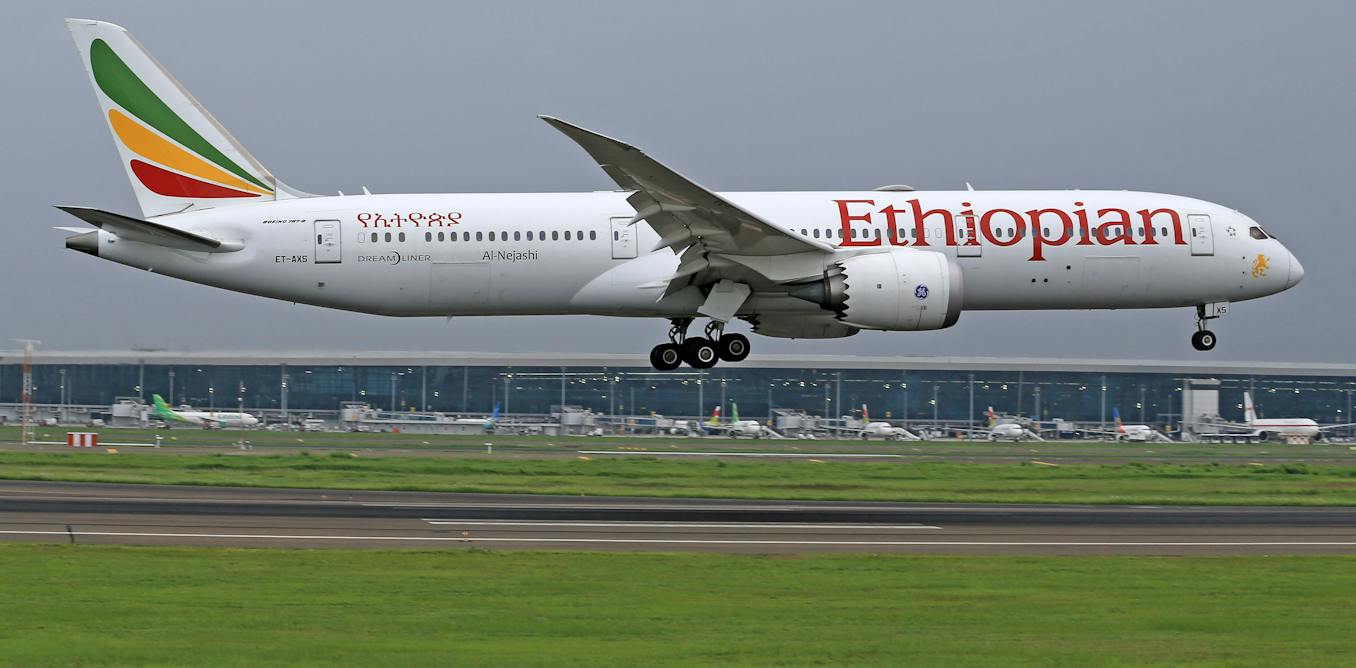
Ethiopian Airlines shows what is possible with coherent institutional support and operational autonomy. But it’s the exception. Many African airlines face restrictive market access, inconsistent regulatory environments and fragmented continental connectivity.
What’s in place
Over the past three decades, the continent has established a legal and institutional framework to promote aviation integration.
But progress has been virtually non-existent. Liberalisation intentions have been undermined by:
To give fresh impetus to their efforts, African Union member states took further steps in 2026.
They signed the Lomé Declaration, a commitment to speed up progress towards a single market in air traffic.
They also signed the Yamoussoukro Decision, a legal framework for intra-African air transport.
What’s missing
Firstly, the focus must be on getting it done. The African Civil Aviation Commission needs a stronger mandate and adequate resources to:
-
coordinate continent-wide crisis responses
-
monitor member states’ compliance with commitments
-
publish periodic assessments of what’s been done
-
facilitate closer cooperation between national civil aviation authorities, regional economic communities and the African Union Commission.
Secondly, enforcement. This is one of the greatest weaknesses facing African aviation integration. Airlines still encounter route denials, discriminatory treatment or regulatory barriers despite formal commitments.
Thirdly, the existing Single African Air Transport Market dispute settlement mechanism should be strengthened. It would serve two purposes:
-
adjudicate when disagreements arise between states or between regulators
-
reinforce confidence among investors and airlines that African aviation operates under predictable and enforceable rules.
External shocks often encourage governments to shield national carriers. Airlines need assurance that agreed rules will be applied consistently, regardless of political or economic pressures.
The European Union offers an important lesson. The success of Europe’s single aviation market came through liberalisation as well as strong institutions. They can interpret rules consistently and resolve disputes authoritatively.
Opening of markets must go with enforcing rules.
