
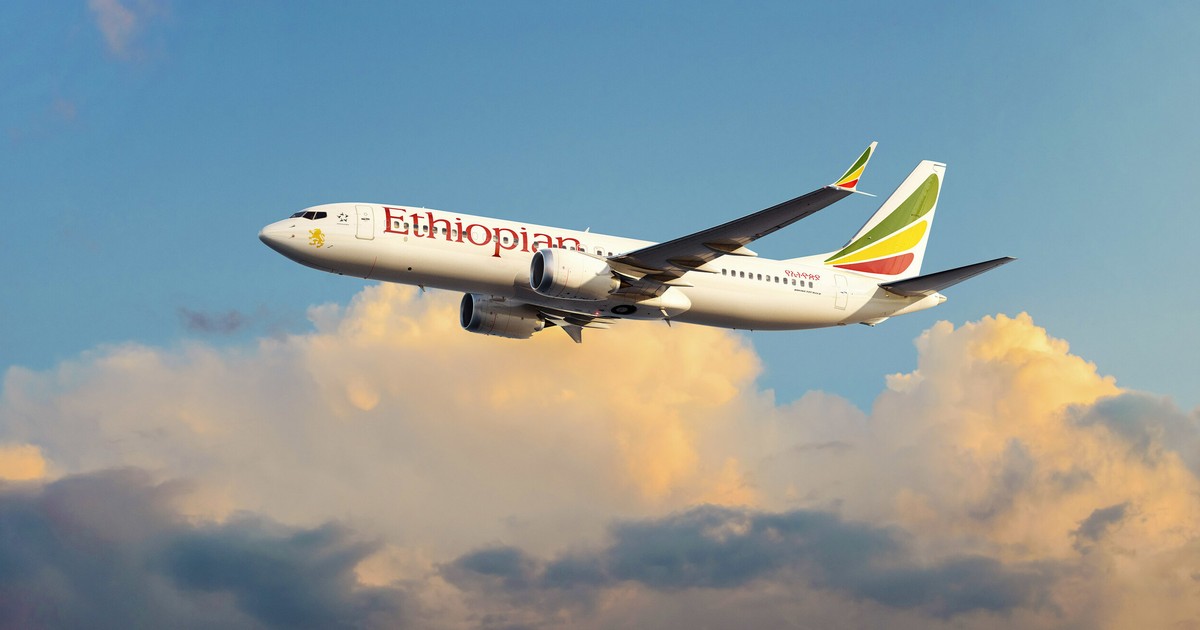
The airline said on Monday that it will purchase six more Boeing 787-9 Dreamliner jets, turning existing options into definite orders.
According to Group CEO Mesfin Tasew, who spoke to Reuters about the move, deliveries will begin in 2028, paving the way for the airline’s massive growth of long-haul flights across Africa and into key global markets such as the United States, Europe, and Asia.
“There are mature routes we need,” he said, including some in Africa where Ethiopian Airlines would like to fly larger airplanes.
“There are routes that we wanted to fly, but we couldn’t do because of the shortage of airplanes, like Australia.”
The agreement was signed at Boeing’s headquarters outside Washington, with members of the Trump administration present.
Among the aircraft under consideration are the Airbus A220, Embraer E-2, and the yet-to-be-certified Boeing 737 MAX 7.
The actual number and kind of aircraft will be determined by the model chosen, but the decision reflects Ethiopian Airlines’ overall objective of modernizing its fleet while increasing its presence in both regional and international markets.
Ethiopian Airlines’ airport expansion
Beyond fleet expansion, Ethiopian Airlines is making significant investments in ground infrastructure.
The airline’s CEO announced development on a $12.5 billion airport project in Bishoftu, a village roughly 45 kilometers southeast of Addis Ababa.
Once completed in 2030, the new facility is planned to be Africa’s largest airport, with four runways and a capacity more than four times that of the country’s present primary airport.
“The new airport will have a capacity of 60 million passengers with all the latest ultramodern facilities,” Tasew said. “We want this airport to be the Dubai of Africa, or the Istanbul of Africa.”
The project is backed by major financiers, notably the African Development Bank, which has contributed $500 million and is leading attempts to obtain a further $8.7 billion.
Construction began earlier this year as Ethiopian Airlines raced to keep up with rising passenger demand, with its current hub set to reach full capacity within the next two to three years.
