
It is no secret that aviation hubs have historically served as a fertile source of inspiration for small-screen and streaming content.
In fact, a plethora of shows have already invited audiences behind the curtain to witness the intricate dance of border control and customs operations.
Believe it or not, travellers are also fascinated with how those destination trips start and end at airports.
I expected a similar style when I happened upon “Extreme Airport Africa” on the History Channel.
However, the surprise was on me. It follows other aspects of the aviation industry, with close-up interviews with trailblazing individuals, rarely documented for mainstream audiences.
Series producer Richard Kracknell recently shared his perspective on the show, offering a deeper look into its unique appeal and the reasons behind the audience’s fascination.
Initially, I questioned him regarding a frequent misunderstanding people might have about the series title – a sentiment I shared at first, too.
He explained: “Rare TV are aviation producers. We make a show called Ice Airport Alaska, which we’ve made for seven seasons up in Alaska.
“And so, when we were thinking about where else in the world we could do an incredible aviation story, Africa just has such unique, incredible aviation and airport challenges that you couldn’t even imagine, especially from us in the UK, that people are dealing with.
“You know, everything from baboons on runways to flying flowers for Mother’s Day. It’s just insane what goes on down in Southern Africa, from an aviation and airport perspective. And so, we just wanted to highlight that and all the incredible men and women who work hard to make sure, you know, Africa flies.”
Of course, red tape is par for the course when filming at OR Tambo and other smaller airports. On how they navigated that and the storytelling they were determined to capture, he noted: “The biggest thing that makes this show exciting is that aviation by its very nature is full of risk. Aviators are constantly dealing with incredible challenges.
“But by their very nature, pilots are quite risk-averse. All we are doing is putting a camera and pointing it at the incredible stuff that they do. You speak to pilots, they’re like, ‘Oh, this is just normal.
“And, ‘Oh, yeah, there were some baboons on the runway. But, you know, then we have to get rid of them, and then we can land.
“To answer your question about OR Tambo and stuff like that, the biggest thing is just trying to build trust. We’re just trying to highlight the incredible work that they do. They were happy for us to highlight that work. You know, it takes a lot of back and forth.
“They get to see versions of the show before it airs. That doesn’t give them editorial control, but it does just mean that, essentially, we build their trust.”
Every episode offers something different. Whether you are witnessing a risky conservation effort from the skies or large packages hovering over unsuspecting bustling streets of Joburg, it’s a world that has remained unknown to most.
Kracknell shared: “Every episode has four different stories. There are eight episodes, so there are 32 stories we want to fill. And we just try to show as wide a range of aviation and airport stories as we can.
“You know, everything from what the Airlink operators are dealing with every day with planes that are having technical malfunctions, and then the incredible work of those engineers having to work all night to make sure that the plane is ready to run the next day again.
“But then we wanted to try and get out of the airport, and that’s where we went to something amazing like that lift in the middle of the Johannesburg CBD, where you’re trying to deliver an aircon unit on top of a building, dangling 100 feet below a helicopter with high winds.
“We wanted to focus on the range of pilots; the personal stories of how these people became aviators, and did they ever imagine they would be hovering above the CBD?
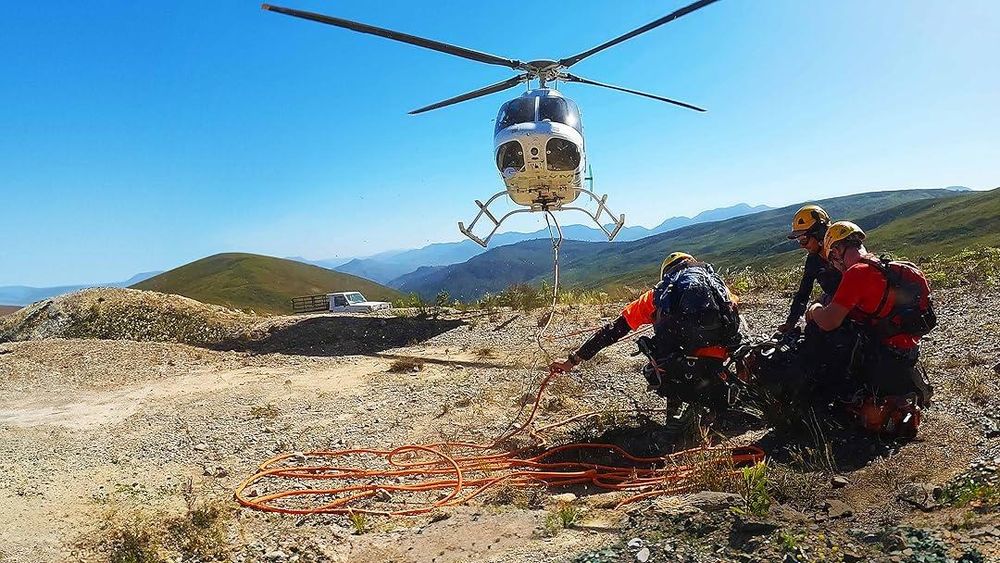
“So another organisation that we filmed Isaac flying with was called Heli-Hackers, where he was dangling these conservationists who destroy invasive species of plants … and he’s dangling people with chainsaws underneath his helicopter.”
As for the places they filmed at, he shared: “They (viewers) can see a wide variety of places across South Africa and Botswana. We filmed at OR Tambo, obviously, a lot there. Then we filmed over at Kruger Mpumalanga International Airport, at Skukuza Airport inside Kruger National Park. We filmed Airlink flying to Pietermaritzburg, and then even their incredible flight out to St. Helena, a tiny island out in the ocean in the Atlantic.
“We were so lucky to get to film in the Okavango Delta in Botswana.”
It is a thrilling, beautifully chaotic reminder that the everyday hustle keeping our skies safe requires equal parts genius engineering and sheer bravery.
For anyone who has ever stared out of a plane window and wondered about the invisible magic making it all work, this series is the ultimate all-access pass.
♦ The show airs on DStv channel 186 on Thursdays at 7.25pm.
