

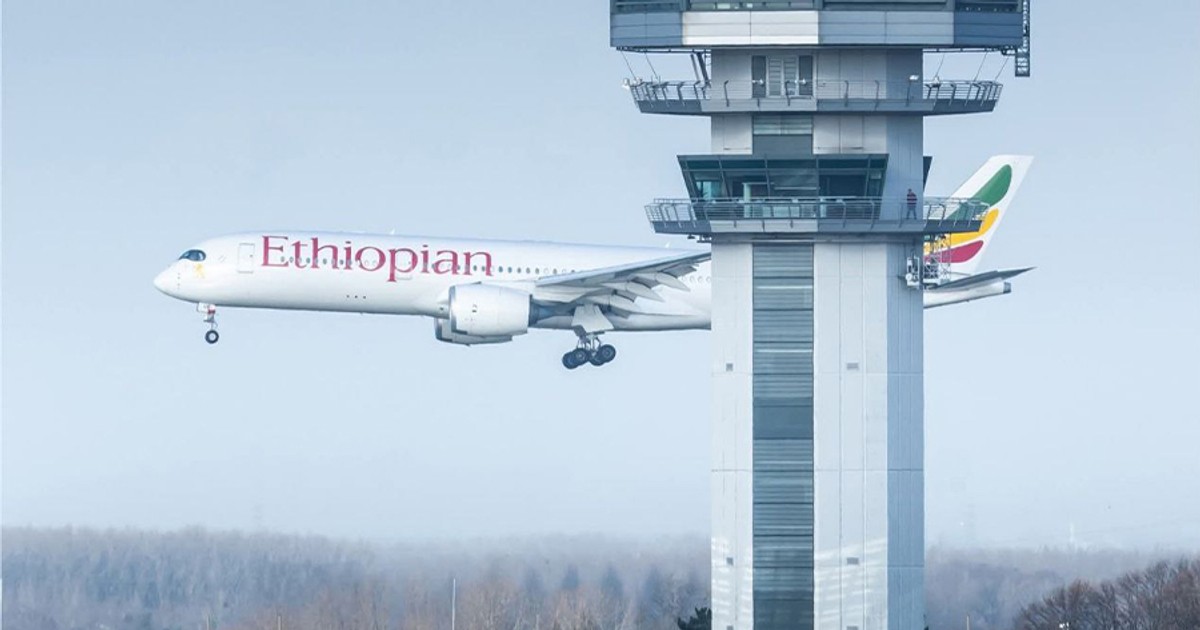
The state-owned carrier reported a 20% increase in revenue for the financial year ended 7 July 2026, underlining its resilience at a time when many global airlines continue to grapple with geopolitical tensions, rising operating costs and supply chain challenges.
Africa’s largest airline also carried 20.7 million passengers, up 10% from the previous financial year, while cargo volumes climbed 16% to 897,000 metric tonnes, reflecting continued growth in both passenger and freight demand.
Expanding while rivals struggle
The latest figures reinforce Ethiopian Airlines’ dominance in African aviation, where it has consistently outperformed many state-owned carriers through fleet expansion, an extensive international route network and a growing cargo business.
Over the past financial year, the airline added nine aircraft to its fleet and expanded facilities at Addis Ababa Bole International Airport, strengthening its position as one of Africa’s busiest aviation hubs.
The carrier currently operates a fleet of more than 150 aircraft and is pressing ahead with an ambitious expansion strategy.
In April, Ethiopian Airlines confirmed the purchase of six additional Boeing 787-9 Dreamliners to support long-haul growth across Africa, Europe, Asia and North America.
The airline is also expected to decide soon on an order for 25 smaller commercial aircraft to expand domestic and regional services. Airbus’ A220, Embraer’s E2 family and Boeing’s 737 MAX 7 are among the aircraft under consideration.
Growth despite regional disruptions
Although the airline did not disclose its annual profit, Ethiopia’s state news agency said financial performance was affected by flight cancellations linked to instability in the Middle East and the Ebola outbreak in the Democratic Republic of Congo.
Those challenges come as airlines worldwide continue to face higher fuel costs and periodic disruptions to international routes caused by geopolitical tensions.
Earlier this year, Ethiopian Airlines said the conflict involving Iran had significantly increased jet fuel costs and forced it to adjust some Middle East services, including reducing flight frequencies to Dubai.
Ethiopian Airlines has become one of Africa’s most important strategic assets, connecting the continent to more than 140 international destinations while serving as a key logistics hub for trade and air cargo.
Its continued expansion also supports Ethiopia’s broader ambition to become Africa’s leading aviation hub. Construction is already underway on a $12.5 billion airport near Addis Ababa, designed to handle up to 60 million passengers annually and eventually become the continent’s largest airport.
