


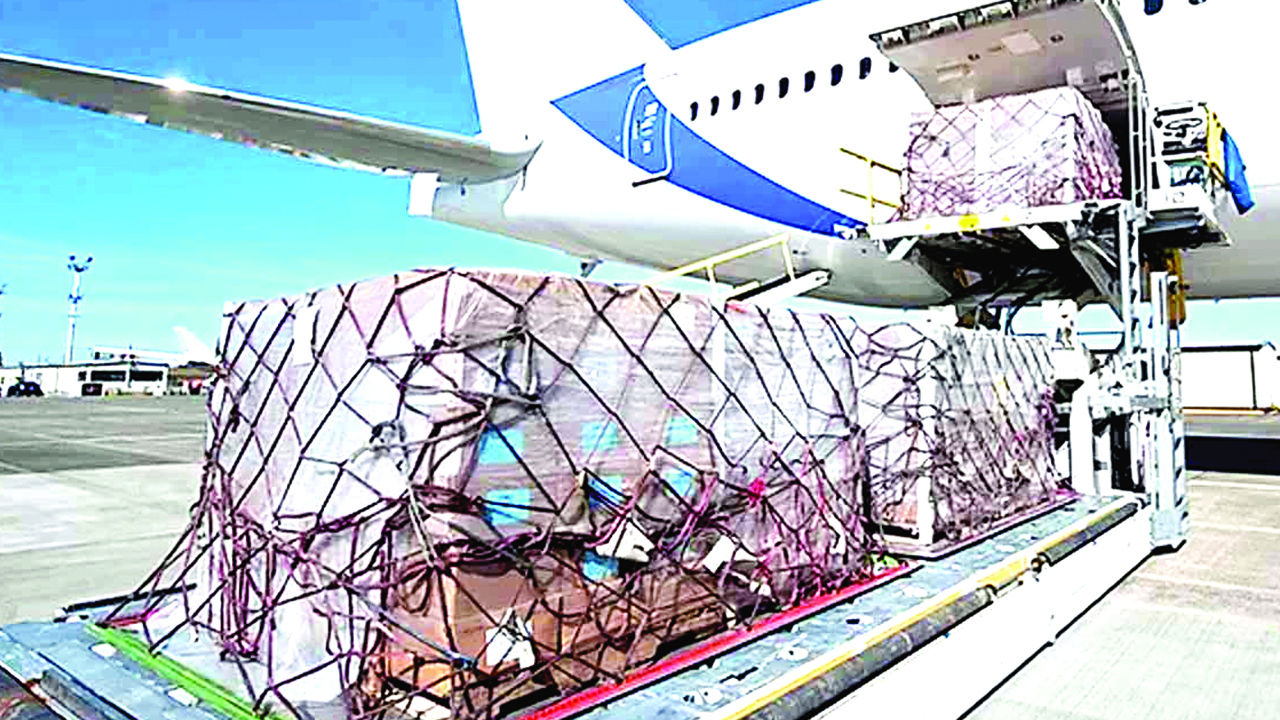
Nigerian exporters using new air cargo corridors to East Africa have cut freight costs by between 50 and 70 per cent, the Nigeria AfCFTA Coordination Office has disclosed.
National Coordinator and Chief Executive Officer of the office, Patience Okala, disclosed this at a webinar on trading goods under the African Continental Free Trade Area (AfCFTA).
She said the savings followed the opening of cargo corridors between Nigeria and East Africa by Uganda Airlines and RwandAir.
The development comes as Nigeria deepens the implementation of AfCFTA following the gazetting of its provisional schedule of tariff concessions for trading goods in April 2025.
Okala said the gazetting signalled Nigeria’s readiness to participate in preferential trade under the agreement.
She said the government had also established an AfCFTA Central Coordination Committee comprising more than 27 ministries, departments and agencies, private-sector representatives, women and youth groups to coordinate implementation.
The coordination office, she added, had produced the ABCs of Doing Business under AfCFTA, a multilingual guide in English, Hausa, Yoruba, Igbo, Pidgin and Arabic covering relevant agencies, documentation, costs, timelines and complaint channels.
She disclosed that seven of 10 complaints received from exporters in the last quarter had been resolved, with three pending.
Five Nigerian businesses, she added, were being assisted to access a $10 million facility under the Afreximbank-AfCFTA Adjustment Fund to expand their operations.
Assistant Comptroller, Nigeria Customs Service, Burhan Sulaiman, representing Assistant Comptroller-
General Nafiu Isiyaku, said zero tariffs under AfCFTA were neither immediate nor automatic and did not cover every commodity.
He said 90 per cent of tariff lines, representing about 5,200 lines, would be reduced to zero over 10 years, while sensitive products would be liberalised over 13 years. Another three per cent would be excluded from tariff preferences.
Sulaiman said exporters seeking preferential treatment must establish that their goods originated from an AfCFTA country, prove their origin and ensure direct shipment between member states.
Goods containing imported inputs could qualify if they met rules on substantial transformation through changes in tariff headings, value addition or specified manufacturing processes, he said.
He urged exporters to keep complete records, noting that Customs could conduct verification and post-clearance audits even after certificates of origin had been issued.
Meanwhile, Assistant Director, Standards Organisation of Nigeria (SON), Chioma Chudi-Anaukwu, warned that exporters unable to meet destination-country standards would struggle to access the continental market.
She said more than 2,000 standards had been harmonised across Africa through the African Organisation for Standardisation, while 107 had been harmonised within ECOWAS.
She identified poor labelling and packaging, inadequate documentation, weak understanding of sanitary and phytosanitary rules and non-compliance with destination-country standards among exporters’ major challenges.
Okala said AfCFTA was not merely about tariff reduction but also about beneficiation and value addition.
She added that discussions were ongoing on another air cargo corridor to North Africa, with an Algerian airline and Royal Air Maroc being considered.
