


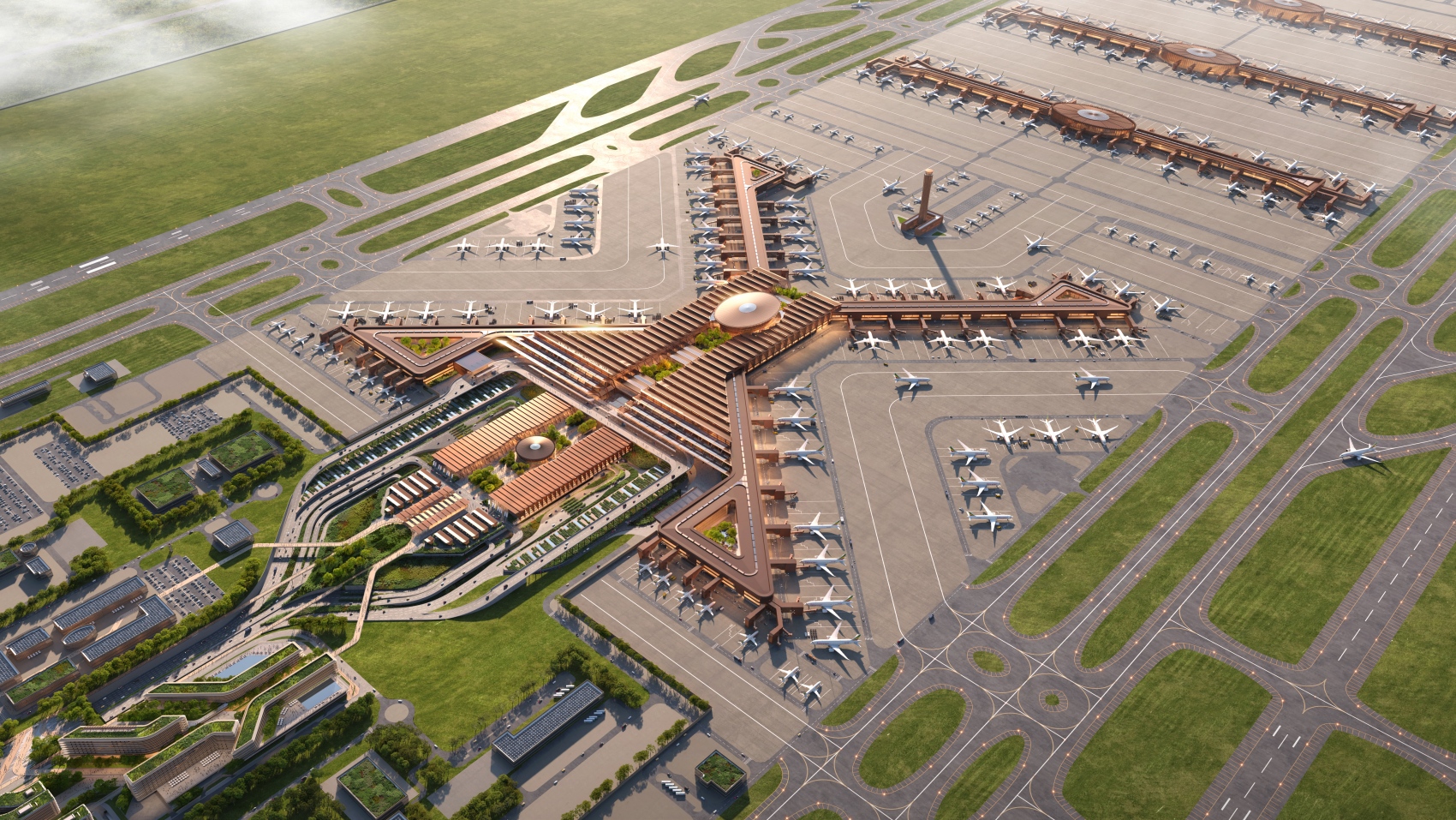
Ethiopian Airlines Group has embarked on the largest airport project in African history. Approximately 40 kilometres south of the capital Addis Ababa, Bishoftu International Airport is being built – a future global transport hub that is set to completely change the balance of power in global aviation. Zaha Hadid Architects is responsible for the architectural design.
The ceremonial start of construction took place on 10 January 2026, when Ethiopian Prime Minister Abiy Ahmed Ali laid the foundation stone for the investment. He emphasised that the project exceeds current infrastructure standards in Africa and that its capacity will be more than four times greater than that of the current Bole Airport, which will reach its capacity limits in the coming years.
The first phase of Bishoftu International Airport is expected to handle 60 million passengers per year. Ultimately, the airport is expected to accommodate up to 110 million travellers, with four runways and parking space for 270 aircraft. The £12.5 billion investment has been planned to meet IATA (International Air Transport Association) forecasts for passenger traffic growth and to strengthen Ethiopia’s position as a key transit point between Africa, Asia and the Middle East.
The Zaha Hadid Architects design was created with the specific needs of Ethiopian Airlines, the largest carrier on the continent, in mind. The airport is to become a transfer hub with the highest standard of service, designed for passengers, the vast majority of whom will continue their journey without leaving the terminal. That is why an extensive range of services is planned, from a 350-room hotel, numerous restaurants and entertainment areas, to gardens and courtyards available to travellers while they wait for their next flight.
The architects have given each of the terminal piers an individual character, using different materials and colour palettes inspired by the diversity of Ethiopia’s regions. The central communication axis, inspired by the nearby Great Rift Valley, connects all parts of the terminal, shortening distances and facilitating orientation during transfers.


The airport’s location almost 400 metres lower than the current Bole Airport and longer runways will increase the maximum take-off weight of aircraft, resulting in more efficient operations, lower fuel consumption and the possibility of longer, direct connections.
Bishoftu International Airport is being built in the Oromia region, which has a mild subtropical climate. The terminal has been designed to achieve LEED Gold certification, with natural ventilation, shading and semi-open spaces that will allow passengers to enjoy the local weather conditions. The structure will be based on modular prefabrication to ensure flexibility and cost-effectiveness. Local materials, including concrete, aggregates and steel, will be used in the construction process.
The sustainable nature of the investment is emphasised by environmental solutions: a rainwater retention system creating new wetlands, photovoltaic installations and the planting of native, drought-resistant plant species. The project also includes public parks and gardens accessible to passengers on both sides of the airport.

The new airport will be connected to Addis Ababa and the existing Bole Airport by a high-speed rail link, becoming the foundation of the regional transport network. The location will enable 24-hour operations without the need for night-time restrictions. An Airport City will be built around the port – a mixed-use development that will create jobs for around 80,000 people.
Cristiano Ceccato de Sabata, Director of Aviation at Zaha Hadid Architects, emphasised that the project is important not only for Ethiopia but for the whole of Africa. As he pointed out, airports connect people and break down barriers, and BIA will become the continent’s gateway to the world. Will this happen? We will find out in a few years. The plan is for the first passengers to use the new airport as early as 2030.
source: Zaha HadidArchitects
Read also: Travel | Modernism | Africa | Recommended | whiteMAD on Instagram
