

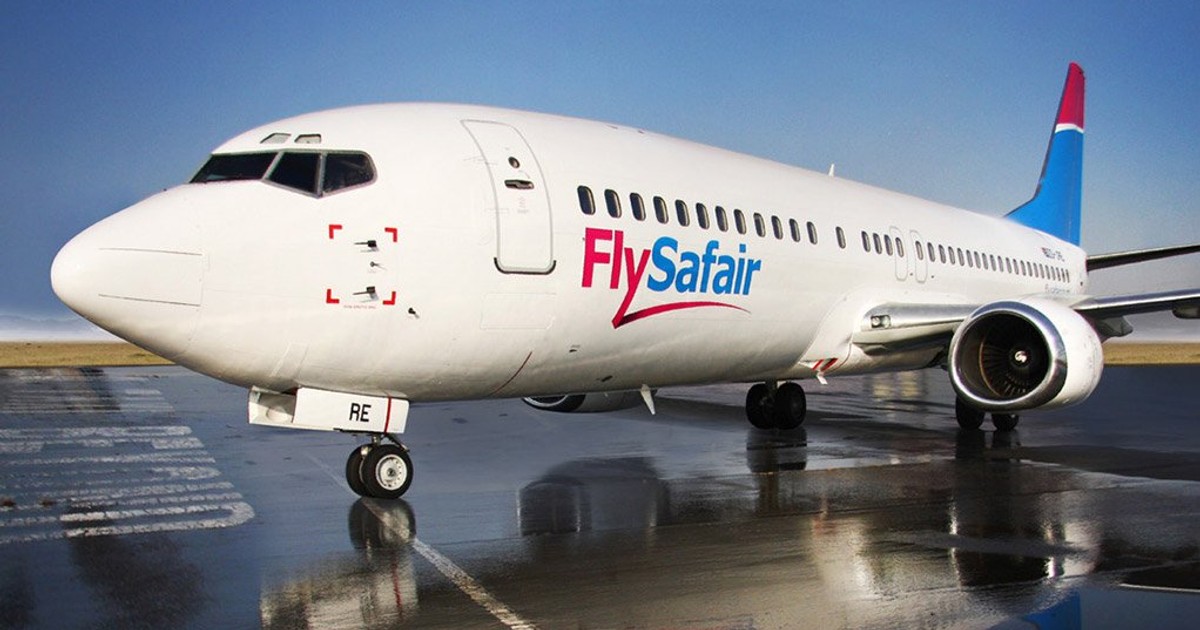
The disruption follows planned maintenance at the Natref refinery in Sasolburg that was compounded by a technical problem, according to FlySafair, South Africa’s largest domestic airline.
Bloomberg reported on Wednesday that South Africa’s energy authorities had convened an emergency meeting with Airports Company South Africa, ACSA, and the Fuels Industry Association of Southern Africa as concerns grew over available supplies.
FlySafair has already arranged to temporarily increase fuel supplies from alternative providers.
The airline is also using a practice known as fuel tankering on some flights, where aircraft depart with additional fuel so that they need less refuelling at their destination.
Kirby Gordon, FlySafair’s chief marketing officer, said the measures should allow the airline to maintain adequate fuel security for its operations.
There was no indication as of Wednesday that the disruption had resulted in widespread flight cancellations.
Pressure on a critical South African refinery
The latest problem puts renewed attention on Natref, an inland refinery that plays an important role in supplying fuel to Johannesburg and South Africa’s economic heartland.
Government data puts Natref’s crude refining capacity at about 108,000 barrels per day. The refinery is operated by Sasol and is one of only two conventional crude refineries currently operating in South Africa, alongside Astron Energy’s Cape Town facility.
That concentration has made interruptions at individual refineries increasingly important to the country’s fuel supply chain.
South Africa has already experienced the consequences.
A fire at Natref in January 2025 halted production and threatened jet fuel supplies to Johannesburg’s O.R. Tambo International Airport.
At the time, the airport was consuming about 3.6 million litres of jet fuel every day and initially had less than eight days of stock available.
The government, ACSA and fuel companies eventually secured 121.1 million litres of jet fuel to keep O.R. Tambo supplied until Natref could restart.
Some of the replacement fuel had to be imported through Durban and transported inland by rail and pipeline.
The episode highlighted how problems at Natref can quickly become an aviation issue, particularly at O.R. Tambo, South Africa’s biggest international aviation hub.
Another fuel disruption in Southern Africa
South Africa’s warning comes less than a week after neighbouring Namibia experienced its own aviation fuel shortage. The two disruptions are unrelated.
In Namibia, a jet fuel cargo failed quality checks at Walvis Bay and was prevented from entering the supply system.
The shortage forced Lufthansa-owned Discover Airlines to reroute some flights from Windhoek through Luanda, Angola, where aircraft could refuel before continuing to Europe. Lufthansa Cargo also temporarily suspended some services.
South Africa’s latest problem instead originates from the disruption at Natref.
However, both incidents underline the exposure of Southern African airlines to breaks in aviation fuel supply chains at a time when carriers are already dealing with elevated fuel costs.
FlySafair has recently raised fuel surcharges after increases in international jet fuel prices. Fuel accounts for a particularly large share of airline operating expenses, making disruptions in either price or availability difficult for carriers to absorb for long periods.
For now, South African airlines are attempting to prevent the refinery disruption from becoming a passenger crisis.
Whether those contingency measures are sufficient will depend on how quickly normal supplies from Natref are restored and how much additional fuel airlines and suppliers can secure elsewhere.
