
Africa’s aviation industry recorded a 9.4 per cent increase in scheduled airline capacity in September 2026, with carriers offering 25.8 million seats across the continent.
According to OAG data, the growth, compared with the same period last year, reflects continued expansion in air travel demand and connectivity across Africa. International flights accounted for 78 per cent of the total scheduled capacity, highlighting the significant role of cross-border services in the continent’s aviation market.
The data also ranked Africa’s major airport gateways based on scheduled outbound seats during the month. The ranking measures the number of seats airlines put on sale for flights departing from each airport.
The figures show how the positions of Africa’s leading airports are changing as airlines adjust their networks, increase or reduce flight frequencies and deploy aircraft across different markets.
1. Cairo International Airport
Cairo International Airport emerged as Africa’s leading airport by scheduled outbound seat capacity in September, with approximately 1.79 million seats, representing an 11.2 per cent year-on-year increase.
The Egyptian airport retained its top position from August, when it recorded about 1.85 million scheduled outbound seats.
2. Addis Ababa Bole International Airport
Addis Ababa Bole International Airport, Ethiopia’s main international gateway and the primary hub for Ethiopian Airlines, ranked second with approximately 1.19 million scheduled outbound seats, up 6.5 per cent year-on-year.
It retained its second position from August, when it recorded about 1.25 million seats.
3. O.R. Tambo International Airport, Johannesburg
O.R. Tambo International Airport ranked third, with approximately 1.16 million scheduled outbound seats, representing a 5.0 per cent year-on-year increase.
The airport retained its third position from August, when it recorded about 1.15 million seats. It remained the highest-ranked South African airport, with capacity substantially ahead of fourth-placed Mohammed V International Airport in Casablanca.
The figure represents a month-on-month increase of approximately 10,000 seats, while annual growth accelerated from 3.5 per cent to 5.0 per cent.
4. Mohammed V International Airport, Casablanca
Mohammed V International Airport in Casablanca ranked fourth, with approximately 730,000 scheduled outbound seats, up 13.5 per cent year-on-year.
The airport is Morocco’s main international gateway and a major hub for Royal Air Maroc, with connections across Africa, Europe, the Middle East and other international markets.
5. Cape Town International Airport
Cape Town International Airport ranked fifth, with approximately 590,000 scheduled outbound seats, representing an 11.3 per cent year-on-year increase.
The airport climbed from seventh position in August, while annual growth accelerated from 6.5 per cent to 11.3 per cent.
6. Houari Boumediene International Airport
Houari Boumediene International Airport in Algiers ranked sixth, with approximately 580,000 scheduled outbound seats, up 3.8 per cent year-on-year.
The airport dropped from fifth position in August, when it recorded about 680,000 seats. This represents a month-on-month decline of roughly 100,000 seats, while annual growth slowed from 7.2 per cent in August to 3.8 per cent in September.
7. Marrakech Menara Airport
Marrakech Menara Airport ranked seventh, with approximately 530,000 scheduled outbound seats, up 10.5 per cent year-on-year.
The Moroccan airport entered the top 10 in September after being outside the ranking in August, when Hurghada International Airport occupied the 10th position with about 480,000 scheduled outbound seats.
8. Jomo Kenyatta International Airport
Jomo Kenyatta International Airport in Nairobi ranked eighth, with approximately 520,000 scheduled outbound seats, representing an 11.9 per cent year-on-year increase.
It fell from sixth position in August, when it recorded about 570,000 seats.
9. Murtala Muhammed International Airport
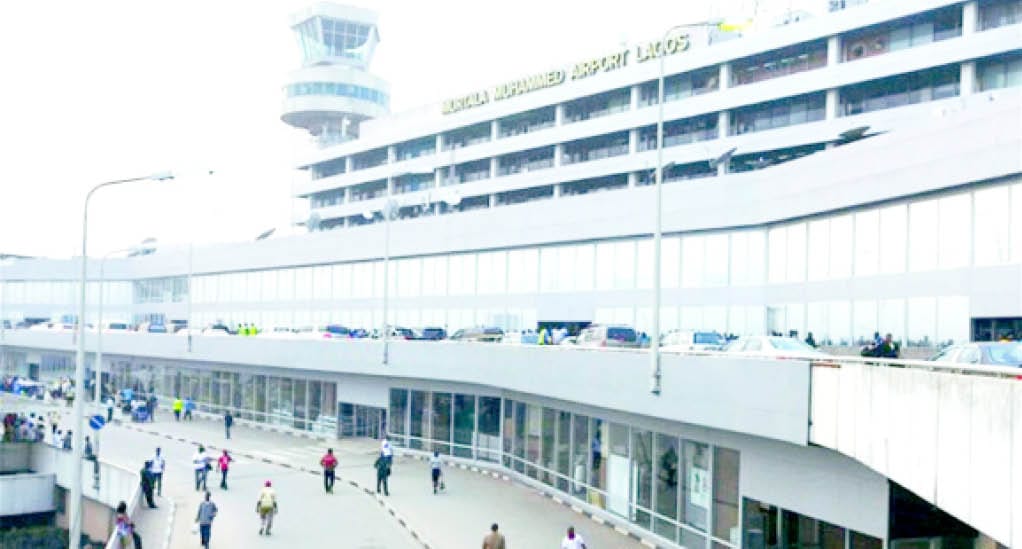
Murtala Muhammed International Airport (MMIA) in Ikeja, Lagos State, retained its ninth position among Africa’s leading airports by scheduled outbound seat capacity.
The airport recorded approximately 470,000 scheduled outbound seats in September, representing a 24.1 per cent year-on-year increase.
Although its scheduled outbound capacity fell slightly from about 480,000 seats in August, MMIA added approximately 90,600 seats compared with September 2025.
MMIA remains Nigeria’s principal international gateway and a major hub for the country’s international air connectivity.
10. Tunis–Carthage International Airport
Tunis–Carthage International Airport, Tunisia’s main international gateway, ranked 10th with approximately 460,000 scheduled outbound seats, up 8.2 per cent year-on-year.
The airport dropped from eighth position in August, when it recorded about 530,000 seats, although its annual growth improved from 7.3 per cent to 8.2 per cent.
UPDATE NEWS:
Nigerians can now invest ₦2.5 million on premium domains and profit about ₦17-₦25 million. All earnings paid in US Dollars. Rather than wonder,
click here to find out how it works.
