

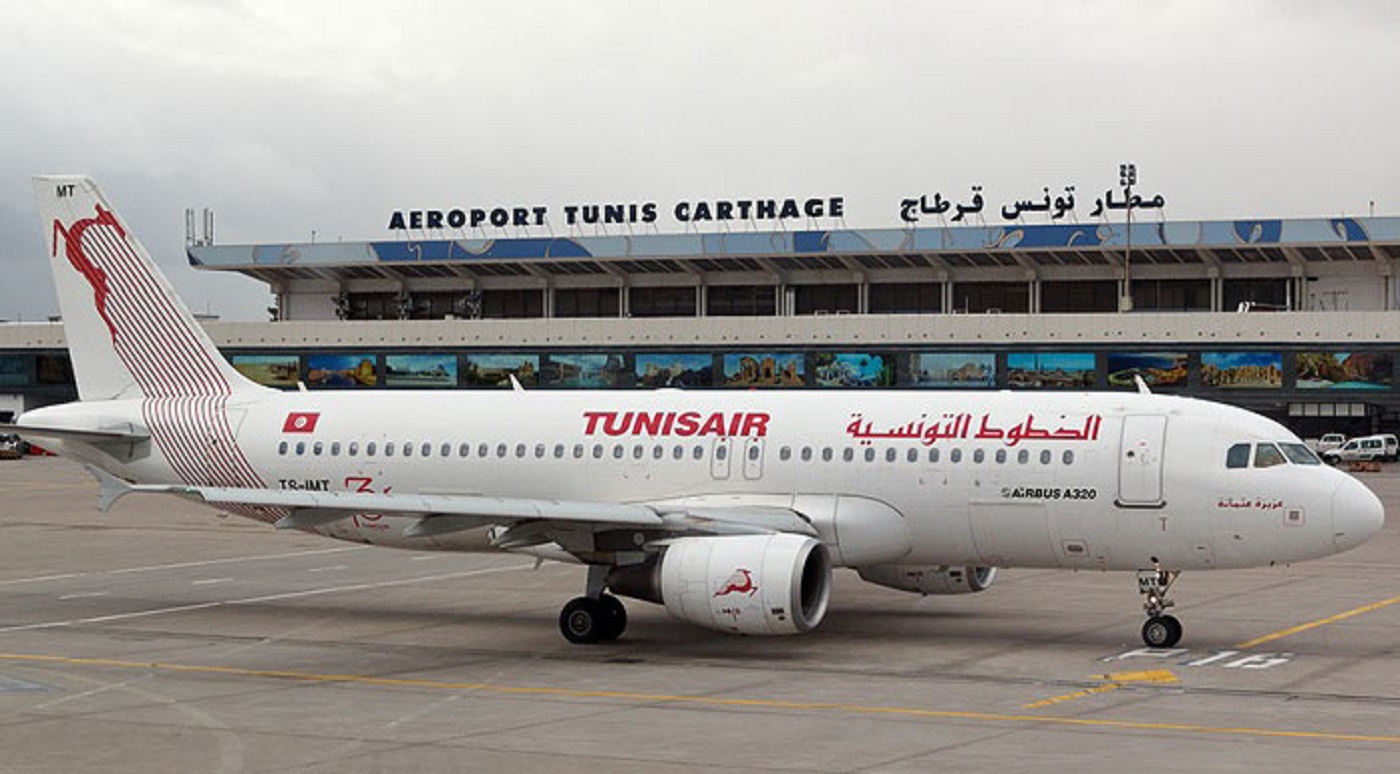
Tunis-Carthage International Airport ranked eighth among African airports by available seat capacity in August 2026, with 526,444 seats, as air capacity across the continent continued to expand, according to the latest analysis by the African Airlines Association (AFRAA).
Published on Sept. 15 under the title “African Airlines’ Performance Updates by AFRAA, August 2026,” the report shows that total seat capacity across Africa increased 8.8% year-on-year in August, driven by network expansion and higher capacity.
Tunis-Carthage placed behind Cairo International Airport, which topped the ranking with 1.85 million seats, followed by Addis Ababa Bole Airport in Ethiopia with 1.25 million and OR Tambo International Airport in Johannesburg with 1.15 million.
Casablanca’s Mohammed V Airport ranked fourth with 803,579 seats, while Algiers’ Houari Boumediene Airport completed the top five with 676,242 seats. Nairobi’s Jomo Kenyatta International Airport followed with 567,644 seats, ahead of Cape Town International Airport with 557,503.
Tunis-Carthage, with 526,444 seats, ranked ahead of Lagos’ Murtala Muhammed International Airport, which had 483,103 seats, and Marrakech-Ménara Airport, with 480,112 seats.
North Africa accounts for largest share
North Africa accounted for the largest share of Africa’s total seat capacity in August, at 41.9%, followed by East Africa at 22.7% and Southern Africa at 18.3%, according to AFRAA.
Intra-African routes also recorded a 10.5% year-on-year increase in available seats.
On international routes, African airlines accounted for 47.2% of available capacity in August, covering both regional and intercontinental services, while non-African carriers accounted for the remaining 52.8%.
Capacity growth outpaces traffic
The increase in capacity has outpaced traffic growth. Available seat-kilometers (ASK) rose 9% in July 2026 from a year earlier, while revenue passenger-kilometers (RPK) increased 5.8%.
African airlines accounted for 51.1% of international traffic in June 2026, compared with 48.9% for non-African carriers. On intercontinental routes alone, however, African airlines held a 36.7% share, against 63.3% for foreign carriers.
Passenger revenues of African airlines also increased by 5.6% in July 2026 compared with June 2025, according to AFRAA.
Air cargo traffic in Africa continued to grow, rising 2.8% year-on-year in July. Imports exceeded exports in most African sub-regions, with East Africa the exception, where export volumes were higher.
Fuel costs remain a pressure
Higher capacity and traffic have come alongside continued cost pressures, particularly from aviation fuel.
During the week ending Aug. 21, 2026, the global average jet fuel price stood at $163.87 a barrel, up 3.1% week-on-week. The African average was higher at $169.01 a barrel.
AFRAA also noted that Africa accounted for just 2% of global aircraft deliveries, while 67.4% of aircraft were in service. The association stressed the need for greater investment in aircraft, infrastructure and connectivity to support the continued development of air transport across the continent.
